How to collect customer emails in your shop (without annoying anyone)
An email list is the one audience you actually own, unlike followers on a platform that can change its mind. Here's when to ask, what to say, and what UK law requires before you send anything.
Key takeaways
- An email list is the only audience you own outright. Followers belong to the platform, and reach can be taken away overnight.
- Ask at the moment someone is happiest, usually just after they have paid and been pleased.
- Give a reason to hand it over. "Join our mailing list" is not a reason; a reward or first access is.
- In the UK you generally need consent before marketing to a consumer by email, and every message needs a way to unsubscribe.
- A small list of people who chose you beats a big list of people who were signed up without noticing.
Social media followers feel like an audience, but you are renting them. The platform decides how many of them see a post, and that number has only ever gone one way. An email list is different: you hold it, and a message you send arrives.
For an independent shop that mostly means a few hundred people, not a few thousand. That is fine. A hundred local people who asked to hear from you is worth more than ten thousand who did not.
When to ask
Timing does nearly all the work. Ask at the moment someone is most pleased with you, which is almost always just after they have paid and liked what they got.
Good moments:
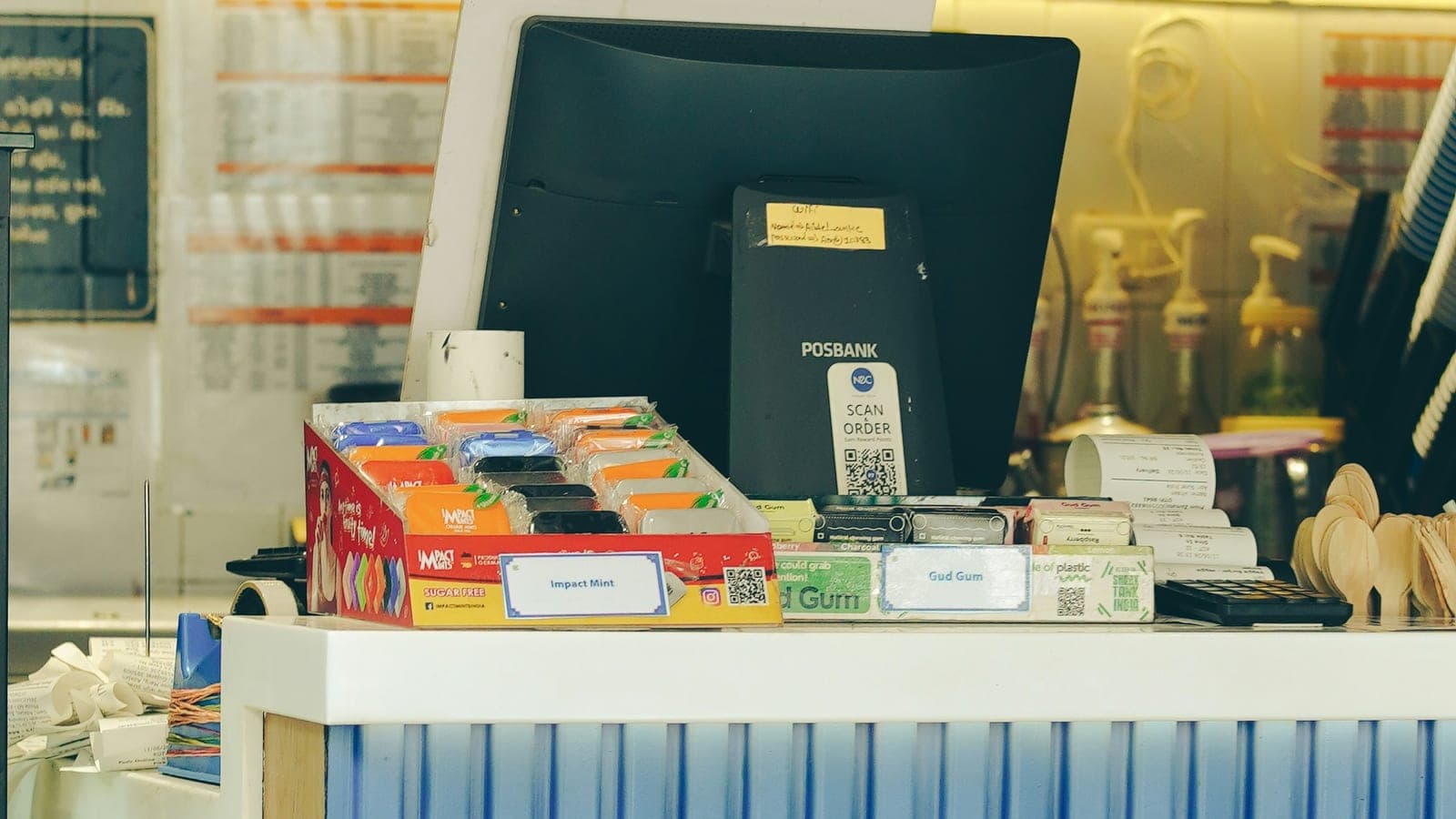
- While the card machine is thinking. There is a dead five seconds there and it belongs to you.
- When someone compliments something. "Glad you liked it — want to know when we make it again?"
- When you hand over a loyalty card, digital or paper. They have already agreed to a relationship.
- At the end of an appointment, when a hairdresser or therapist is writing down the next one anyway.
Bad moments: on the way in, mid-queue, or when something has gone wrong.
What to say
"Would you like to join our mailing list?" gives someone nothing to say yes to. Mailing lists are a thing people already have too many of.
Give a reason instead, and make it specific and small:
- "We email once a month with what's new. Want me to add you?"
- "We tell our list about new bakes the day before. Shall I put you on it?"
- "If you want first pick of the Christmas boxes, we email that list first."
Three things make those work: a frequency so they know what they are agreeing to, a reason that is worth something, and a question they can decline without awkwardness.
How to collect it, practically
You do not need software to start.
| Method | Good for | Watch out for |
|---|---|---|
| A notebook by the till | Starting today, costs nothing | Handwriting; type it up weekly or it rots |
| A tablet or phone form | Accuracy, no transcribing | Someone has to hand it over and unlock it |
| A QR code to a short form | No hardware, works in the window | Needs a reason next to it, or it gets ignored |
| At loyalty sign-up | They are already giving you details | Must be a separate, optional choice |
| On the receipt | Read later, no pressure | Low response; good as a backup, not a main route |
Whichever you use, ask for the first name as well. It costs one extra field and makes everything you send afterwards sound like a person wrote it.
The legal part, briefly
This is the bit most guides skip, and it is not complicated for a normal shop.
In the UK, marketing by email is covered by PECR, alongside UK GDPR for the data itself. For an individual — which includes a sole trader — the general rule is that you need their consent before sending marketing email.
There is a narrower route often called the soft opt-in: if someone bought something from you (or negotiated to), you gave them a clear chance to refuse marketing when you collected the address, and every message since has offered an easy way out, you may market similar products and services to them. It is useful, but it is narrower than people assume, and it does not cover an address someone gave you for a booking confirmation and nothing else.
What this means in practice:
- A positive action is required. An unticked box they tick, or saying yes out loud and you writing it down. Pre-ticked boxes and "by signing up you agree" do not count.
- Keep a note of when and how each person agreed. A date column in your spreadsheet is enough for a small shop.
- Every marketing email needs an unsubscribe that works, and acting on it promptly.
- Say who you are in the message. If you are a limited company, the Companies Act also wants your registered name, number and office in business emails — usually a line in the footer.
- Do not buy a list. It has no consent behind it, and it will do more damage to your sending reputation than the list is worth.
That is a summary rather than legal advice. The ICO publishes plain-English guidance on direct marketing and it is worth half an hour of your own reading before the first send.
What to actually send
The commonest reason lists die is that nobody sends anything for eight months and then sends a sales email to strangers.
A rhythm that works for a small shop:
- Once a month is plenty. Twice if you genuinely have something each time.
- Lead with the thing, not with news about you. "Sourdough is back on Saturdays" beats "A message from the team".
- One thing per email. A list of six offers gets none of them read.
- Short. Four or five sentences is a perfectly good email from a café.
- Give the list something first sometimes — early access, a quiet-hours offer, a heads-up before it goes public. It is the reason they stay on it.
If you want somewhere to start, a quiet-hours offer is a good first email: it is useful to the reader, it fills a slot that was costing you anyway, and it gives the list a reason to feel worth being on.
How to know it is working
- Unsubscribes after each send. A handful is normal. A spike means you sent something the list did not sign up for.
- Whether anything happened in the shop in the two days after. For a local business that is the real measure, not opens.
- Whether the list grows week on week. If it has stalled, the ask has gone stale or whoever is on the till has stopped making it.
Start with a notebook and one good question at the card machine. You can move it into proper software when the notebook gets full — and if it never does, you have lost nothing but a page.
Questions and answers
Do I need permission to email my customers in the UK?
Generally yes. Under PECR, marketing email to an individual needs their consent. There is a narrower "soft opt-in" for people who bought something from you, where you may market similar products if you gave them a clear chance to refuse at the time and in every message since. This is a summary, not legal advice, and the ICO's own guidance is the place to check your situation.
Can I add customers to my list if they gave me their email for a booking?
Not automatically. An address given to confirm an appointment was given for that purpose. If you want to send marketing as well, say so at the point you collect it and let them decline without losing the booking.
Is a pre-ticked box enough to count as consent?
No. Consent has to be a positive action, so pre-ticked boxes and "by continuing you agree" do not count. An unticked box the customer chooses to tick does.
How many email addresses do I need before it is worth sending anything?
Fewer than you think. A hundred people who chose to hear from you is a useful list for an independent shop, and it is worth sending to from the first dozen. The number matters far less than whether they actually wanted it.